★ Save on shop price when you subscribe to Rifle Shooter. Pay just £4.49 per issue – 44% cheaper than buying in-store. Subscribe here ★


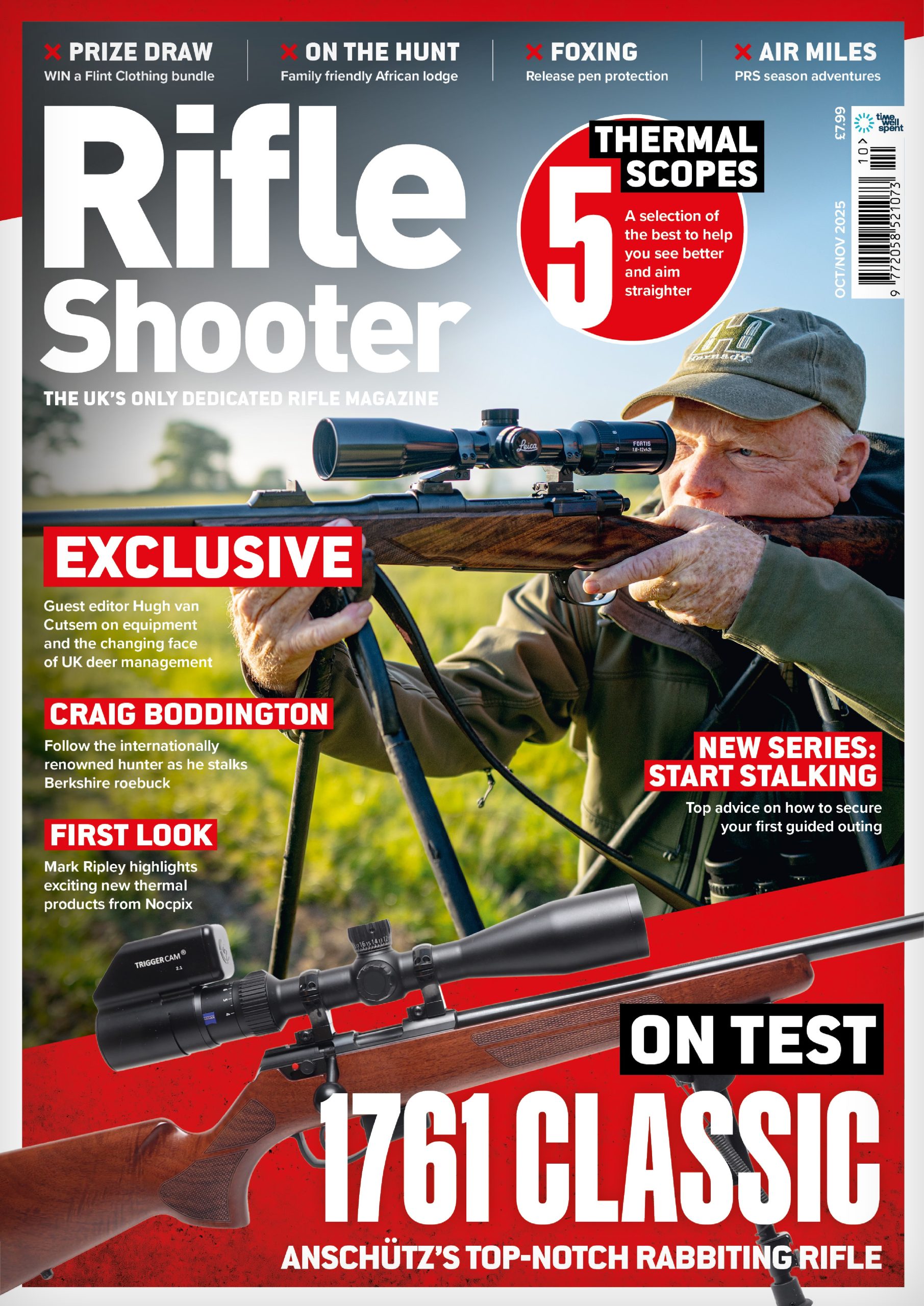
Anschütz 1761 Classic: Rabbiting royalty
With its compact format and crisp trigger, the Anschütz 1761 provides Bruce Potts with unmatched reliability and accuracy for some serious vermin control
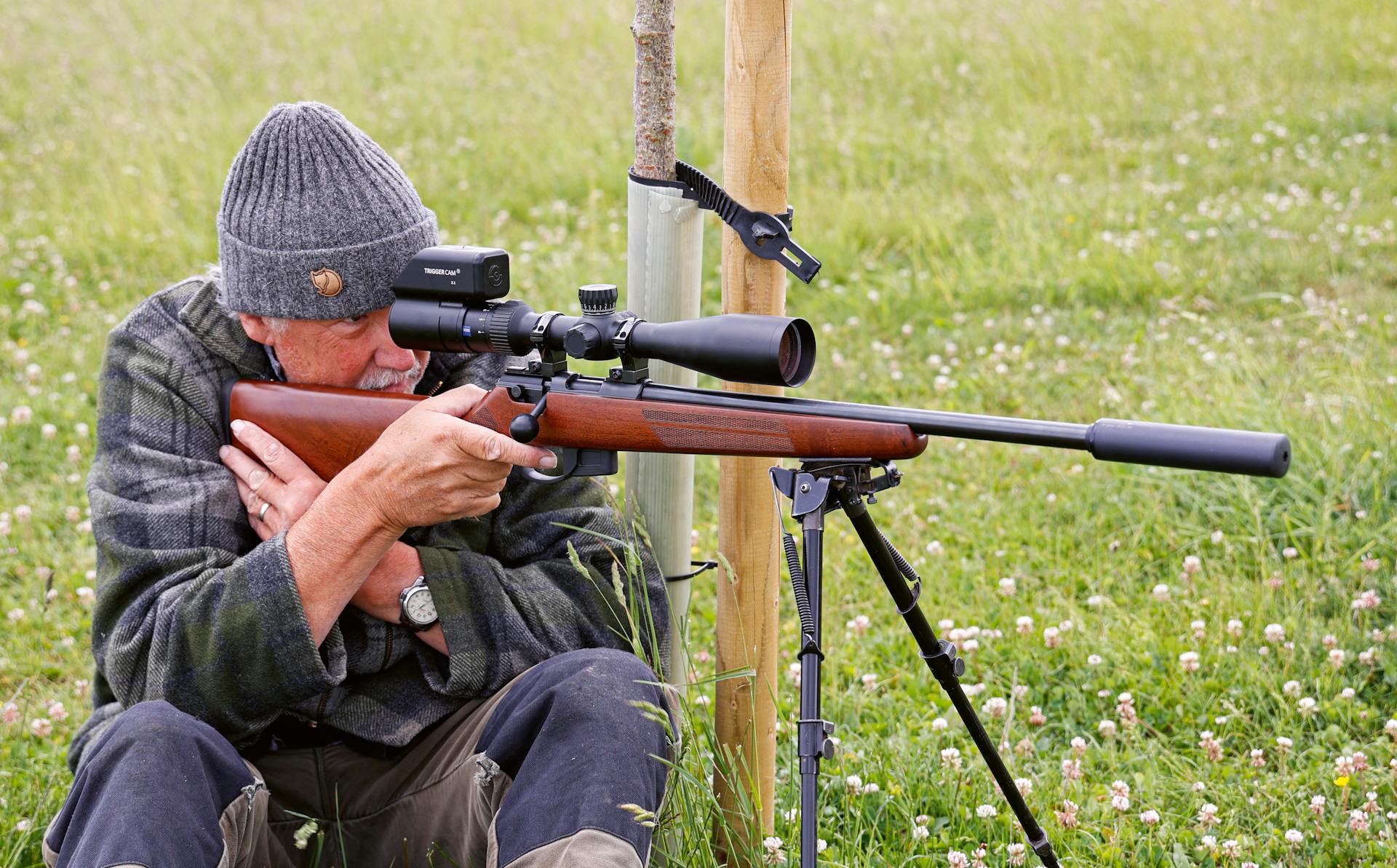 I shoot a lot of rabbits and the Zeiss V4 and Anschütz 1761 Classic combination was deadly in the field

This new 1761 version of the Anschütz rimfire sporter represents the pinnacle of rimfire design and accuracy in a compact hunting format. It is offered in .22 LR, .22WMR or .17 HMR (on test). The rifle is configurable in various formats and styles to complement the shooter’s end use and satisfaction. Anschütz is known for supplying rifles in both right- and left-handed options, and the 1761 is also offered in a variety of stock designs. I had the traditional-looking and handling Classic walnut stock variant on test.
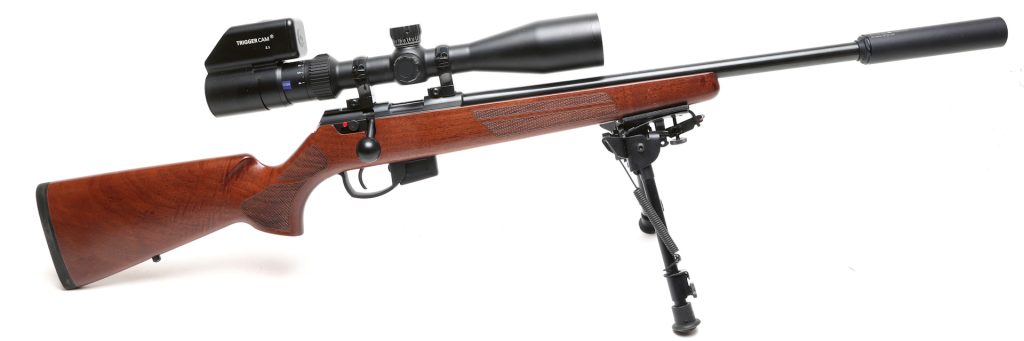
There is also a choice of single- or two-stage triggers to further customise the Classic to your own preferences. You can also choose among bolt knobs, muzzle thread pitches, scope mounting options and even polymer or aluminium trigger guards. This 1761 is unashamedly aimed at the real hunter who appreciates the match-winning qualities for which Anschütz is renowned, condensed into a no-nonsense compact hunting rifle.
As such, the sleek lines of the older rounded-profile 54 and 64 rimfire actions have gone, replaced by the newer, squarer-looking and compact 1761 design. With the option of four barrel lengths, you can fit a sound moderator without affecting balance.
The whole Classic ethos of ‘just get the job done’ resounds in this format. The ambidextrous ergonomics of the stock, at 36in with the 18in .17 HMR barrel option on test, fully exploits the fine handling qualities of this trim little sporting rifle. It is ideal for carrying all day, shooting from a concealed vantage point or while lamping from a 4×4. This version is priced at £1,545.
Stock
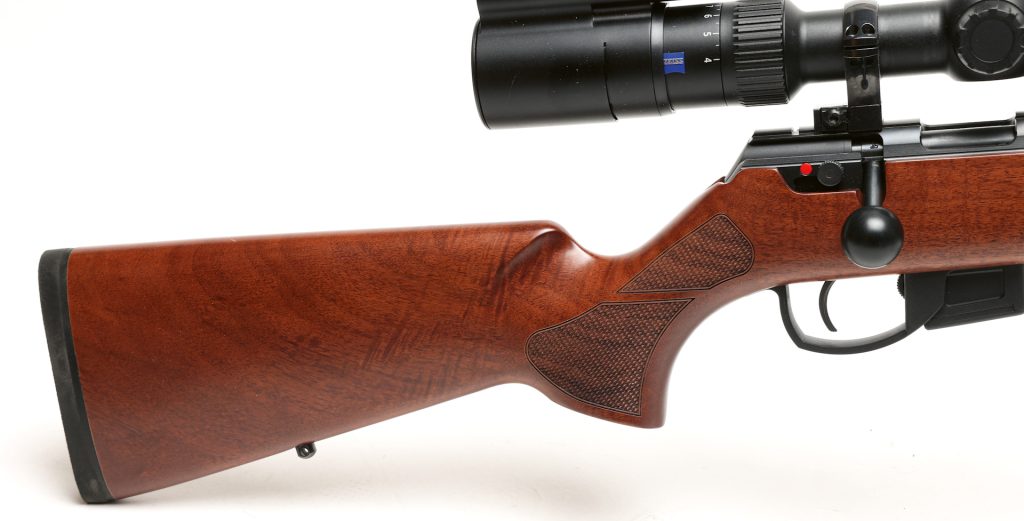
I always think the stock is the pivotal part that either makes or breaks a rifle design. It is the first thing that catches your eye and then you are drawn in to handle the rifle. If everything feels perfect, you are halfway there. At first glance the Classic stock is just that: a classic-profiled, straight-combed, non-adorned, lightweight sporter. Anschütz has also used walnut for more visual appeal, but this particular example had strength through tight grain rather than fancy figuring and colour.
Anschütz tends to stain its stocks, giving them a characteristic dark hue that is visually balanced with laser-cut chequering on the forend and pistol grip. This is much neater and more precise than the older method of cutting. The chequering was a bit fussy on older models, but here it is clean and tactile.
The ambidextrous nature of the stock lends itself to being shot from either shoulder in the field when you sometimes need to swap orientation, regardless of preference, just to get a shot at a rabbit. Its short 14.0in length of pull allows easy manipulation from any shooting angle, which is perfect for the job.
The solid black rubber recoil pad is very tactile and maintains a grip in the shoulder, which is handy when shooting off sticks and when you need to free your hands to reload a magazine. The two QD swivel studs finish off the stock and accept a sling or bipod fitment. All in all this is not a winner in the beauty stakes, but it is all you need for hunting. It is incredibly tactile and offers really solid and lightweight handling characteristics in the field.
If you look into the stock when the barrelled action is removed, you can see some very good and precisely cut bedding areas. The stock screws penetrate here and the action sits in the walnut. A perfect union between metal and wood will always ensure consistent accuracy as there is a solid, flat bedding of the action into the stock, guaranteeing the highest precision. An additional integrated abutment in the flat contact surface ensures a rock-solid union. And just to make extra sure, the forend channel is cut to allow the barrel to free-float without touching the stock along its length.
Action
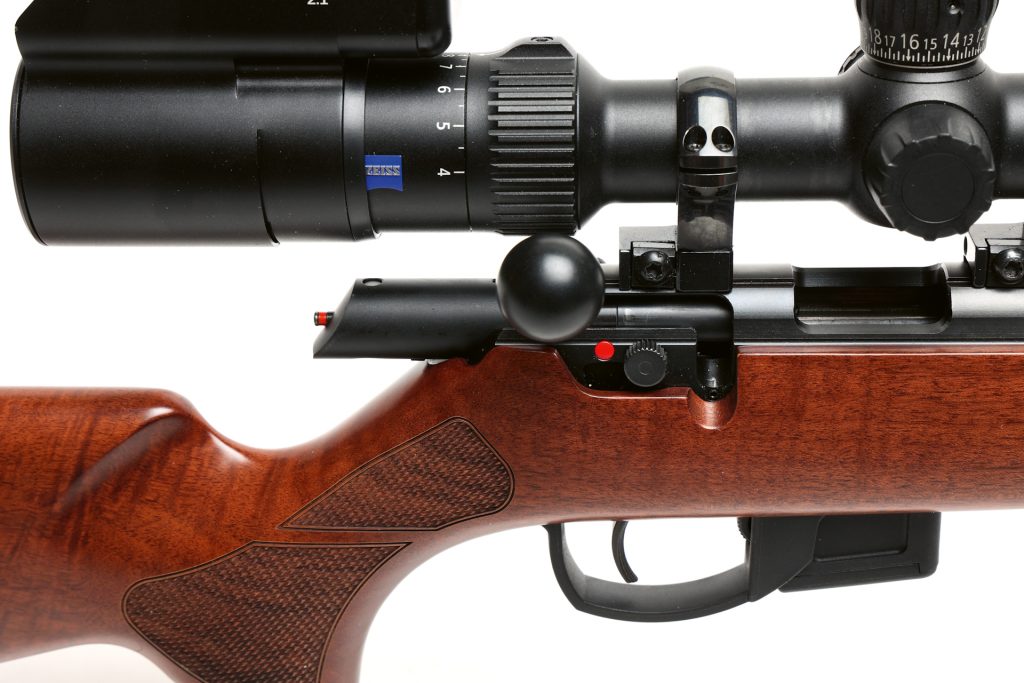
The action is where the biggest changes have occurred with the introduction of the 1761 series. It has a newer styling, blending modern angular lines into an easy-to-manufacture and compact overall design. Anschütz’s top-notch quality control remains, with the whole action being precisely machined from steel. There is a matt blued finish, which is practical for hunting and decent at resisting scratches and corrosion when wiped over. On top of the action are 11mm dovetails, with a rear recoil lug cut out. There is also the option to fit a one-piece Picatinny rail, which will please N/V, thermal and multispectral scope users.
A generous ejection port cut into the right side of the 6in receiver facilitates the removal of a stuck cartridge or manipulation in the event of a jam. At the rear on the left side of the action is the bolt release lever. Depress it at the front and the bolt can be removed to clean it and the bore. A closer look at the bolt reveals where Anschütz has made quite a few changes. There is now a newer, more compact bolt throw, in part due to the repositioning of the handle to the mid-section of the 4.75in bolt itself.
Common to rimfire rifles, it is still a rear-locking lug arrangement, with the large lugs joined to the straight bolt handle positioned 120° apart. This rotates to lock the action, while the front portion stays parallel and slides within the raceways. This makes for a very fast and short bolt throw, with the 1.5in long straight bolt handle and its tactile plastic ball knob really helping. You can choose from a variety of bolt knobs, including walnut, at extra cost.
The forward section of the bolt sports twin extractor claws at 3 and 9 o’clock, with a 12 o’clock firing pin aperture. This really makes sure that spent cases are extracted from the chamber with confidence, and the firing pin left a good solid indention on all the case rims tested.
At the rear of the bolt handle is an elongated bolt shroud that houses the cocking piece. When cocked, a small red cocking indicator appears at the rear. Due to the orientation of the three locking lugs, bolt lift, as expected, is very low at about 50°. Thus the whole cycling of the action is smooth and effortless, which is another Anschütz trait.
With the bolt handle now at the mid-point of the bolt, the whole bolt handle and knob stay within the action itself. Only the rear shroud protrudes, so a fast second shot with your head still in position on the stock is not a problem as the bolt will not hit your face.
Just behind the bolt slot in the action is the safety mechanism. This uses a rounded toggle lever that in the forward position is ‘fire’, and rearward locks the trigger mechanism but still allows the bolt to operate. Importantly, it is silent, which hunters will certainly appreciate.
Barrel
There are options for 14, 18, 20 or 24in (.22 LR only) lengths, all with a medium barrel profile of 19mm. You can also choose a ½ UNF or UNEF muzzle thread, along with a recessed muzzle crown, like Anschütz’s target rifles, to protect the rifling. I had the hunter-friendly 18in model with a UNF thread. Being chambered in .17 HMR, it has the industry-standard 1 in 16in rifling twist rate. Made from match-grade chrome-moly with honed button rifling, the interior is precise with crisp lands. The barrel is fully free-floated and wears the same matt bluing as the action areas.
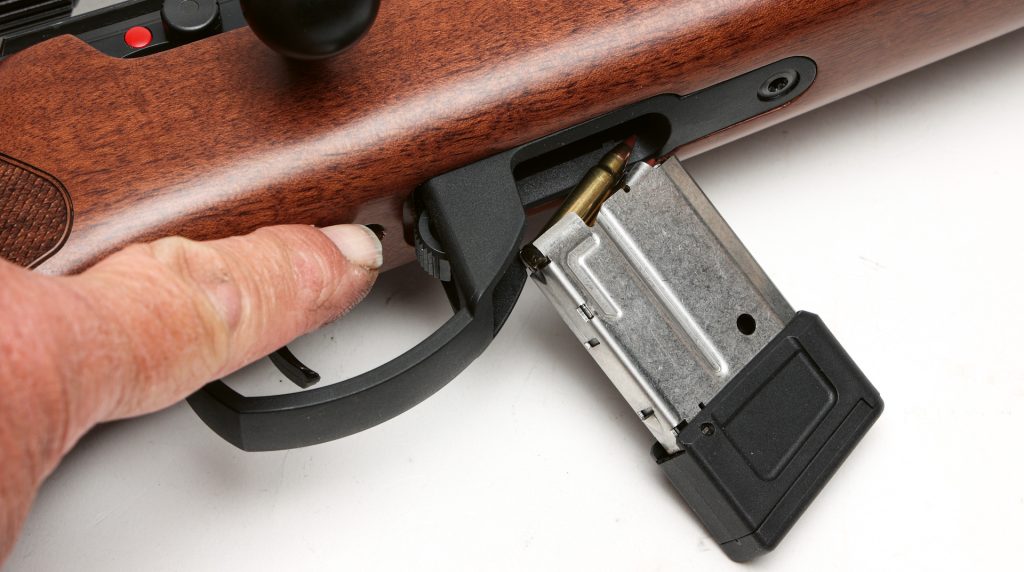
Loading and feeding the Classic is a breeze with the newer configuration of the five- or 10-shot magazines. The magazine is housed within a larger polymer trigger guard (aluminium is an option), and the magazine housing release catch is easily accessible. The five-shot magazine supplied has a steel upper body and a polymer lower that sticks out of the stock and is easily grasped for a magazine change even in the dark.
Trigger and safety
Now we come to the star of the show, which has always been one of Anschütz’s strong points. Anschütz has a number of triggers to choose from, but this model has the two-stage 5061 D unit. It has an adjustable blade that moves fore and aft as well as side to side from its cylindrical hanger. A single grub screw tightens or loosens for adjustment. On my Lyman Trigger gauge it gave a very consistent pull weight of 2lb and 8.5 ounces, which no doubt contributes to the Anschütz’s accuracy.
In the field test
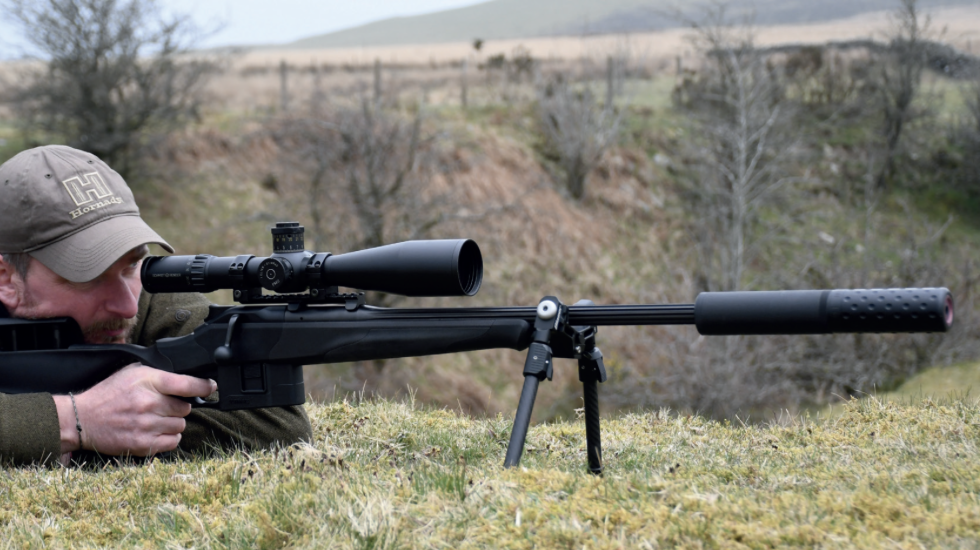
I fitted the very capable and excellent-value Zeiss V4 4-16 x 44mm scope, which not only achieves good light-transmission but also offers edge-to-edge clarity, as expected from a Zeiss scope. Up front and snugly fitted to the muzzle thread was the super-efficient A-Tec Wave sound moderator, which successfully calmed the supersonic crack of the HMR rounds.
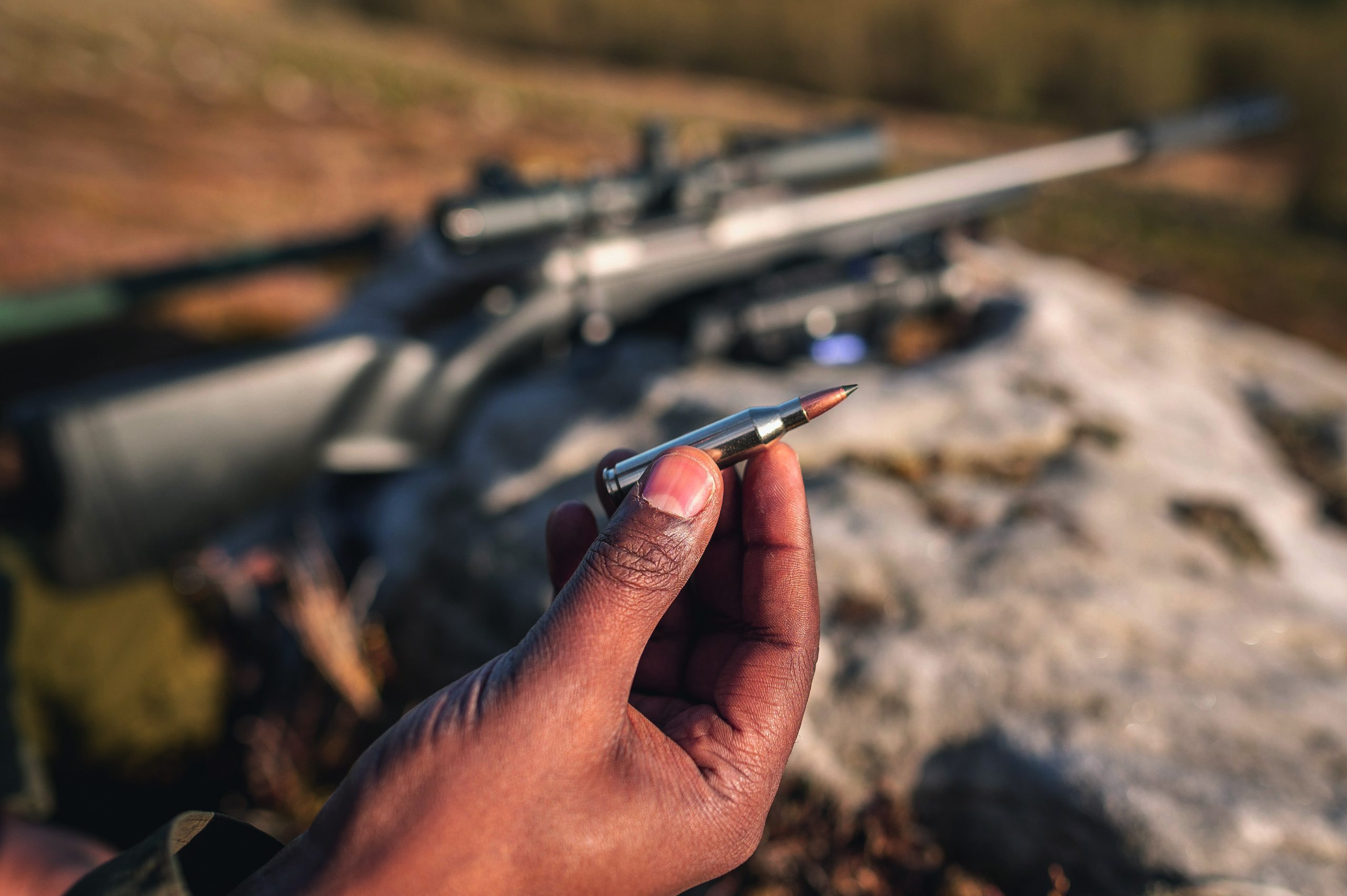
I chose four typical HMR rounds, with bullet weights ranging from 15.5-20gr. One was a lead-free option. After an initial period of inconsistent availability and case flaws, the .17 HMR cartridge has firmly established itself as a practical and highly accurate vermin cartridge in Britain. It is good to see the calibre being offered in a variety of rifles.
First up was the round that started the HMR craze. The Hornady 17gr V-Max load with its red polymer-tipped projectile was primarily designed to shoot a flat trajectory at 2550fps and expand rapidly on thin-skinned game. In the Classic’s 18in barrel I had a five-shot average velocity of 2491fps, which equates to 234ft·lb energy. All shots clustered into 0.816in at 50yd. That’s a great start and shows why Anschütz is considered a premium rimfire rifle maker.
Next up was another 17gr bullet, the Winchester HV round with its grey-tipped V-Max projectile. These grouped into a scant 0.739in at 50yd at a velocity of 2497fps and 235ft·lb energy. They were the ones I used later on some rabbits.
If you want to go lighter on the bullet weight and also satisfy the lead-free ethos, there is the Hornady NTX (Non-Toxic) round. This shot slightly higher velocities, as expected due to its lighter 15.5gr bullet, with a velocity of 2522fps and 219ft·lb energy. Again, accuracy was incredibly consistent, with five shots going into 0.785in. These also expand exceedingly well and are great for all types of small game such as squirrels, crows and rabbits.
Finally, and one of my favourite .17 HMR rounds, was the CCI GamePoint. It is so called because it is a departure from the V-Max frangible format of bullet construction and offers a more controlled expanding projectile with a copper-jacketed bullet, a lead core and a hollow point. These are superb for slightly larger game such as foxes as they penetrate and then expand, delivering their payload of kinetic energy into the vitals. I had a velocity of 2402fps/256ft·lb and five shots into 0.6790in. Over all the ammunition the average group size for the Classic was an impressive 0.755in.

Performance at ranges
I always shoot the chosen ammunition in the test rifle not only at the original zero range but also at closer and longer ranges as rabbits can pop out anywhere. I used the Winchester 17gr HV ammo as I had a good quantity of it and it has always worked for me. With an average velocity of 2497fps, when zeroed at 50yd it was -0.67in at 25yd, +0.21 at 75yd and -0.12in at 100yd and -2.78in at 150yd if you want to stretch it a little. At 50yd the velocity dropped to 2164fps/177ft·lb energy and at 100yd it is down to 1857fps/130ft·lb, but that is still more than a .22 LR at the muzzle.
I test all my hunting rounds in ballistic wax to ascertain the true terminal performance. The Winchester HV is a consistent round that looks similar to the other 17gr V-Max bullets. It had deep start penetration of 1.0in and then expanded to produce a wound channel of 47.0ml with a total penetration of 4.80in. In comparison the standard 17gr Hornady V-Max started out at a healthy 2517fps for 239ft·lb and then expanded at 0.45in as it entered the medium. It then penetrated a total of 5.25in and dumped its tip within 2in, with the jacket evenly spread around the wound channel, which had a volume of 51.2ml. So the Winchesters I used are a good alternative.
The real test, as always, is in the field after game. I was after rabbits ranging from 10-85yd in and around a dumping ground at the edge of a farmyard. I positioned myself downwind against a tree with the rifle resting on my sticks and waited patiently. Soon the first small rabbits appeared and then the ‘eaters’. I loved how nimble and agile the Classic was, short and very light, enabling me to track and precisely hold the reticle on target with minimal fuss.
I accounted for 13 rabbits in total, all headshots. The Classic is accurate enough to take headshots out to 100yd. The lock time (the time from trigger pull to the firing pin striking the rim of the cartridge) on the 1761 action is very fast and really helps with accuracy. See the video on the broadswordballistics channel.
Verdict
The looks of this 1761 model are deceptive, as it has no real bells and whistles. However, for real shooters who actually use their rifles in the field and need an accurate and reliable rimfire, this Classic model is one of the best. Accuracy was not in question and the trigger was sublime. Although the looks are a bit angular I did appreciate the easier magazine release when I needed to make a quick change. Viking Arms is the new importer, so give them a call to see the latest models.
Technical specification
Manufacturer: Anschütz
Model: 1761D HB
Type: Bolt Action
Overall Length: 36.0in
Barrel length: 18in, ½in UNF muzzle thread
Length of Pull: 14.0in
Weight: 2.8kg
Finish: Blued steel
Calibre: .17 HMR (.22 LR and .22 WMR options)
Stock: Classic walnut
Magazine: 5-shot detachable
Scope mounts: Dovetail or Picatinny rail option
Trigger: 5061D, single-stage, adjustable
Price: £1,545
Importer: Viking Arms Ltd
Related Articles
Gear
Night vision
Optics
Z6i 4-24x56 P BT - redefined for a new era of precision
For more than 75 years, SWAROVSKI OPTIK has shaped the future of premium hunting optics. Guided by the principle “by hunters, for hunters”, the Tyrolean family-owned company brings together deep f...
By SWAROVSKI OPTIK
Gear
The “data-driven range bag” - what shooters actually use
Most range bags are packed for every possible scenario—and end up cluttered with gear that never gets used. A data-driven range bag flips that idea around, focusing on what actually helps you shoot ...
By Talking Headsets
Put the phone down. Pick up the magazine.
Subscribe to Rifle Shooter
Rifle Shooter is Britain’s only dedicated rifle shooting publication – and at just £4.49 an issue, a subscription is the smartest decision you’ll make this season. That’s 44% off the newsstand price, delivered to your door before it hits the shelves.
Every bi-monthly issue is packed with rifle and optics reviews, stalking features, long-range technique and international hunting adventures. Each edition also features an exclusive interview with a guest editor from the very top of the sport – candid, first-hand insight you won’t find anywhere else.
No algorithms. No clickbait. Just exceptional rifle shooting content, crafted by people who live and breathe the sport.
Since launching in 2015, Rifle Shooter has built a loyal community of stalkers, target shooters and hunters who know that some things are worth reading properly. Join them.