★ Save on shop price when you subscribe to Rifle Shooter. Pay just £4.49 per issue – 44% cheaper than buying in-store. Subscribe here ★



The “data-driven range bag” – what shooters actually use
Most range bags are packed for every possible scenario—and end up cluttered with gear that never gets used. A data-driven range bag flips that idea around, focusing on what actually helps you shoot more, troubleshoot faster, and waste less time.
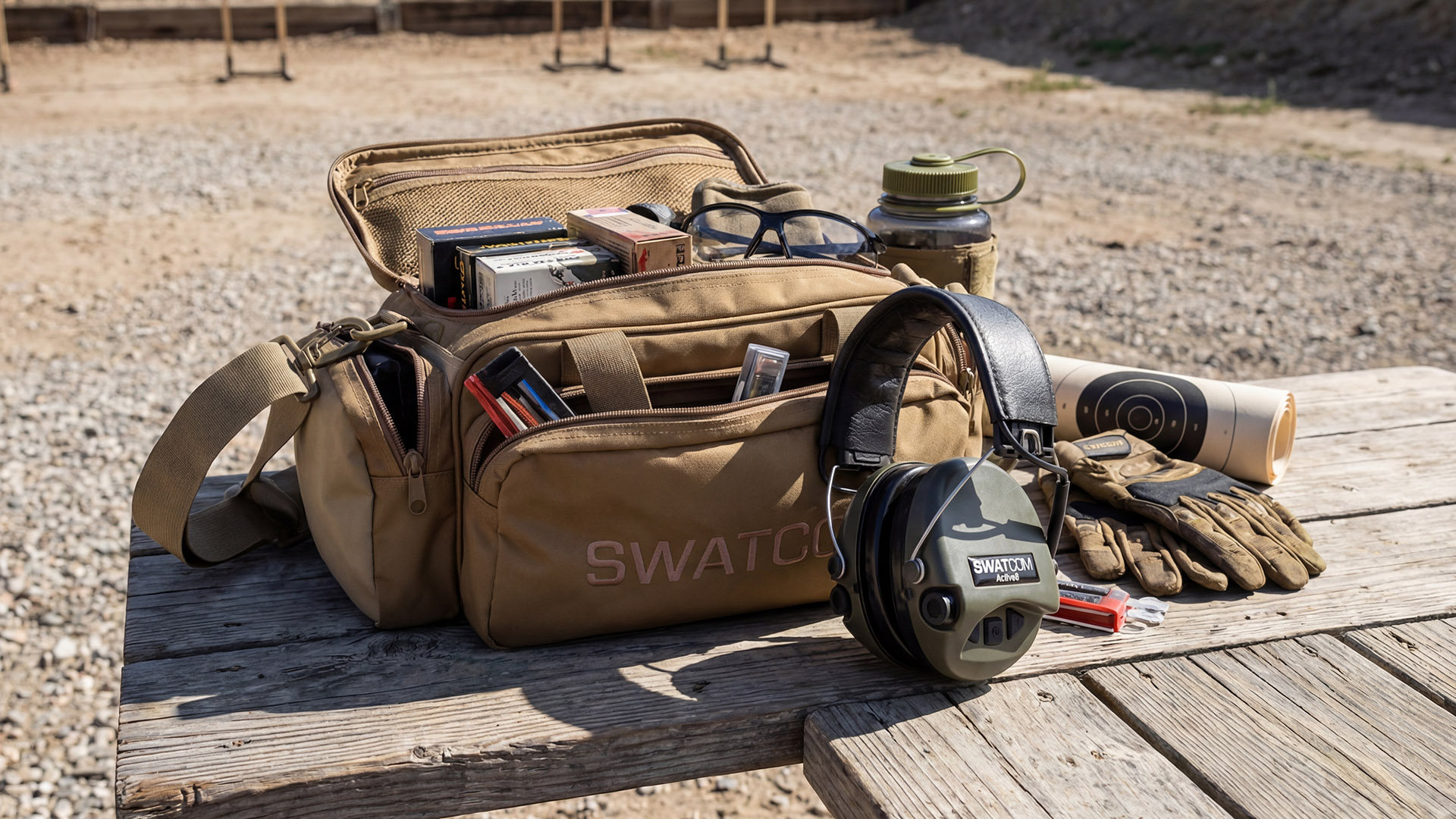

Every shooter has seen a “bag dump.”
Some are impressive. Some are ridiculous. Most are a mix of genuinely useful kit… plus a handful of items that haven’t seen daylight since the last time someone reorganized the garage.
Here’s the thing: the best range bag isn’t the one with the most gear.
It’s the one that helps you shoot more, troubleshoot faster, and waste less time, because it’s built around what you actually use.
That’s what “data-driven” means in this context: not spreadsheets for the sake of spreadsheets, and not copying someone else’s packing list. It’s simply using real feedback from your own range time to build a range bag that’s lighter, smarter, and more reliable.
What “data-driven” looks like on the range
A data-driven range bag does three jobs:
- Prevents session-killers
The stuff that ends a range trip early (forgotten basics, dead batteries, missing small tools) is predictable and preventable. - Reduces friction
Less digging. Less repacking on the tailgate. Less “where did I put that?” - Supports better decisions
The bag isn’t just storage. It’s where your notes, targets, and small problem-solvers live. The things that turn “random shooting” into “useful practice.”
If that sounds a bit over-serious for a casual range day, fair enough. But even a laid-back session improves when you’re not borrowing a stapler, hunting for a pen, or improvising a fix with a car key.
Step 1: Define the job before you pack the bag
Most overstuffed range bags come from one mistake:
Packing for every possible range day… at the same time.
Instead, think in “range day types.” A rifle shooter’s needs change dramatically depending on the goal.
Common session types:
- Zero/confirm (simple, precise, repeatable)
- Practice (positions, transitions, skills)
- Long-range (more support gear, more data)
- Load work (note-taking, labeling, consistent process)
- Match prep / competition (spares, efficiency, rules compliance)
- Hunting sight-in (field realism, minimal clutter)
You’re not committing to one type forever. You’re just giving your bag a framework: a core loadout that always stays packed, plus modules you add depending on the day.
Step 2: Build a “core kit” that never leaves the bag
This is the equipment that should be in your bag even if you decide to shoot on a whim.
Core kit (the non-negotiables)
Safety & compliance
- Ballistic eye protection
- Shooting ear protection
- A simple way to show clear/empty when required (whatever your range expects)
- A small basic first-aid kit appropriate to your environment and comfort level
Shooting essentials
- Ammunition for the planned session (plus a little margin)
- Magazines (or feeding devices) you actually use
- A way to keep ammo/mags organized so you don’t mix things up
Targeting & marking
- Targets suited to your practice style
- A marker that works in heat/cold
- Tape/pasters (because you will end up needing them)
- Something to attach targets (stapler, tacks, clips — pick what matches your range)
Data capture
- Notebook/data book or a dedicated notes app (pick one you’ll actually use)
- Pen/pencil that lives in the bag (not “usually in the truck”)
Micro-maintenance
- A compact tool option that matches your rifle/optic setup (think: “tighten a loose thing,” not “build a rifle”)
- A small rag or cloth (because something will get dusty, wet, or grimy)
Power (if you run electronics)
- Spare batteries for the things that can ruin a day when they die
- A small light (even if it’s just for finding items in the bag)
That’s it. If you can’t shoot safely and productively with your core kit, the rest of the bag doesn’t matter.
Step 3: Add “modules,” not clutter
Modules are small pouches or sub-kits you can grab based on the session type.
Think of them like LEGO blocks for range days: you keep your core bag ready, then snap on what you need.
Practical modules that earn their keep
1) The “targets & admin” module
- Extra target hardware (staples/tacks/clips)
- Tape/pasters refill
- Spare marker
- Small ruler or simple measuring aid (if you care about tracking results)
2) The “data” module
- Range card or dope card method you trust
- A dedicated wind note template (paper or digital)
- A labeling option (for ammo boxes, targets, or notes)
3) The “support” module
- Rear support bag
- Small mat or pad (if you’re frequently prone)
- Shooting gloves (if terrain/props chew up hands)
4) The “tools & spares” module
- The specific bits you need for your setup (not a hardware store)
- Spare small parts that fail often for your rifles (this is personal and learned over time)
- A compact cleaning option for quick fixes (not a full bench kit)
5) The “electronics” module
- Power bank or spare batteries
- Charging cable(s) that match your devices
- Lens cloth for optics (because you’ll end up needing it)
6) The “comfort” module
- Water
- Snacks
- Weather basics (sun protection, light layer, bug solution if relevant)
Notice what’s not here: random duplicates of everything “just in case.” Modules work because they’re intentional and easy to remove.
Step 4: Collect the data that matters
Here’s the simple process that changes everything:
After each range trip, capture three lists:
- Used (items you actually touched)
- Wished I had (what would have prevented friction)
- Didn’t use (items that stayed buried)
That’s it. No overthinking.
You can do it in a notebook, on your phone, or on a card stored in your range bag. The format doesn’t matter, consistency does.
The “one-minute bag audit” (do this before you leave the range)
Before you drive off:
- Repack the bag the same way every time
- Note any consumables you burned through (targets, tape, batteries)
- Write down the one thing that slowed you down today
That last line is gold. It tells you what to adjust next time.
Step 5: Sort your gear by frequency and consequence
A smarter bag isn’t just “things I use often.”
It’s also “things that prevent a bad day.”
Use this simple sorting method:
Category A: Used every trip
These live in your core kit.
Category B: Used often
These belong in a module that’s easy to grab.
Category C: Rarely used, but range-saving
These stay, but get a dedicated place so they’re not floating loose.
Examples (generic, not universal):
- A spare battery type that commonly dies
- A small tool that fixes your most common loose component
- A backup eye/ear option in case something breaks or gets forgotten
Category D: Never used
This is where bags get heavy.
If something hasn’t been used in a long time, either:
- Move it to a “support bin” that stays in your vehicle, or
- Store it at home and bring it only when the session requires it
Your range bag isn’t a museum. It’s a working tool.
What shooters actually use (the repeat offenders)
If you watch yourself across a handful of range days, you’ll notice a pattern.
The items that get used over and over typically fall into a few buckets:
- Protection (eyes/ears, plus the small things that make them comfortable to wear all day)
- Attachment & marking (targets, tape, marker, stapler/clips)
- Data capture (something to record results and settings)
- Support (bags, mat/pad, small comfort aids)
- Small fixes (the one tool that solves the common problem)
- Power (batteries/cables if you rely on electronics)
The “data-driven” part isn’t guessing what should be useful. It’s noticing what repeatedly becomes necessary in the real world, and giving it a consistent home in the bag.
Example: three data-driven loadouts for rifle shooters
These aren’t “perfect lists.” They’re templates that show how core + modules keeps things efficient.
1) Zero/confirm day
Bring your core kit, plus:
- Targets suited to precise aiming
- A simple way to mark shots and write notes
- Minimal tools (only what fits your setup)
- A support option if your shooting position benefits from it
Focus: clean process, clean notes, minimal distractions.
2) Long-range practice day
Core kit, plus:
- Data module (range notes, cards/templates)
- Support module (rear bag, mat/pad if needed)
- Electronics module (power/spares for anything you depend on)
- Extra target attachment/marking supplies
Focus: consistency, repeatable setup, efficient note-taking.
3) Load work / “process-heavy” day
Core kit, plus:
- Data module (because details matter)
- Labeling option (so you don’t forget what you changed)
- Targets/marking refills
- A little more “admin” support to keep the bench organized
Focus: reducing mistakes, keeping records you can trust later.
The goal isn’t more gear, it’s fewer problems
A data-driven range bag isn’t about being tactical, trendy, or impressive.
It’s about being honest:
- What do you actually use?
- What do you keep borrowing?
- What problems keep showing up?
Your bag should evolve the same way your shooting does: by learning, adjusting, and simplifying.
If you do nothing else, start with this:
- Pack a sensible core kit
- Run the three-list audit after every trip
- Remove one “never used” item each time you add something new
In a month, your range bag won’t just feel lighter.
It will feel like it belongs to a shooter who shows up prepared, and spends more time shooting than searching.
Related Articles
Gear
Night vision
Optics
Z6i 4-24x56 P BT - redefined for a new era of precision
For more than 75 years, SWAROVSKI OPTIK has shaped the future of premium hunting optics. Guided by the principle “by hunters, for hunters”, the Tyrolean family-owned company brings together deep f...
By SWAROVSKI OPTIK
Gear
Gear buying guides
New year weight loss
It’s time to shed some pounds. Rob Hardy explores the options for reducing the weight of his much loved, but decidedly heavy, dual-purpose rifle
By Robert Hardy
Put the phone down. Pick up the magazine.
Subscribe to Rifle Shooter
Rifle Shooter is Britain’s only dedicated rifle shooting publication – and at just £4.49 an issue, a subscription is the smartest decision you’ll make this season. That’s 44% off the newsstand price, delivered to your door before it hits the shelves.
Every bi-monthly issue is packed with rifle and optics reviews, stalking features, long-range technique and international hunting adventures. Each edition also features an exclusive interview with a guest editor from the very top of the sport – candid, first-hand insight you won’t find anywhere else.
No algorithms. No clickbait. Just exceptional rifle shooting content, crafted by people who live and breathe the sport.
Since launching in 2015, Rifle Shooter has built a loyal community of stalkers, target shooters and hunters who know that some things are worth reading properly. Join them.